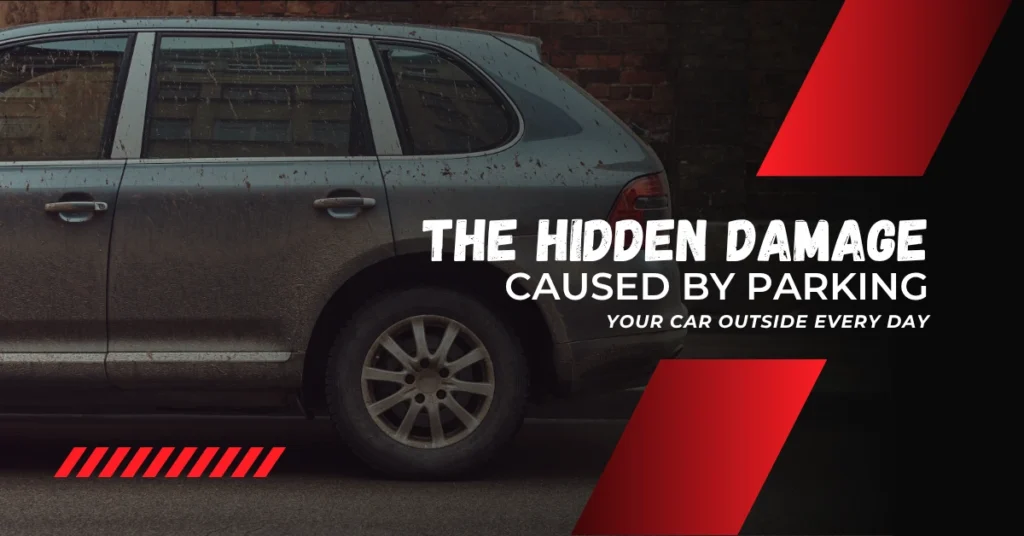
Outdoor parking damage is one of the most underestimated threats to a car’s appearance — and it happens every single day, while the car is just sitting there. Most owners worry about what happens on the road: close calls, potholes, careless drivers. What they rarely consider is the slow, cumulative damage building up in the parking spot. For most urban car owners in India, daily outdoor parking does more harm than driving ever will.
It’s slow, invisible, and cumulative — which is exactly why it catches people off guard.
1. UV Rays: The Slow Fade
Sunlight is the most consistent threat to any car finish. UV radiation doesn’t destroy paint overnight — it works by breaking down the chemical bonds in the clear coat, layer by microscopic layer. After years of daily exposure, paint that was once vibrant begins to fade, lose depth, and eventually chalk. In Indian summers, where cars regularly sit in direct sunlight for 8–10 hours, the process is accelerated compared to countries with milder climates.
2. Heat Bakes Interior Surfaces
The damage isn’t limited to the outside. Cabin temperatures in a car parked outdoors in peak Indian summer can reach 60–70°C. At those temperatures, dashboard materials soften and warp. Leather begins to dry and crack if it isn’t conditioned regularly. The adhesives holding interior trims can weaken. Plastics that were designed to last decades start showing stress and discolouration years early. All of it is preventable, but only if you know it’s happening.
3. Bird Droppings and Tree Sap: More Damaging Than They Look
This is one most people underestimate. Bird droppings are acidic. So is tree sap. Left on paint for more than a day or two — especially in warm weather, where they bond faster — they don’t just sit on top of the clear coat. They chemically etch into it. The damage left behind can’t be removed with a wash; it requires polishing or paint correction. Cars parked under trees or near power lines face this risk daily.
4. Dust Isn’t Just Cosmetic
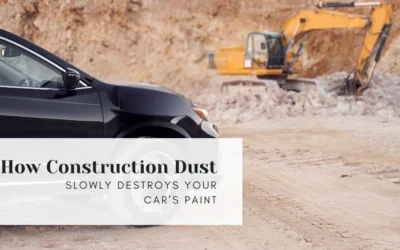
Construction dust, industrial fallout, and road grime that settle on a parked car aren’t soft. Many of these particles — especially silica from concrete dust — are harder than the clear coat. When owners wipe down a dusty car without rinsing first, they’re dragging those particles across the paint surface. The result is a network of fine scratches that build up over time, robbing the paint of its clarity and gloss.
How to Reduce Outdoor Parking Damage
You can’t always control where you park, but you can significantly reduce the impact.
Ceramic coating is the most effective long-term defence against UV, dust adhesion, bird dropping bonding, and water spotting. A quality ceramic coating on a car that parks outside daily is not a luxury — it’s insurance.
PPF on high-exposure surfaces like the bonnet, roof, and bumpers creates a physical barrier against bird dropping etching, tree sap, and stone chips that ceramic alone can’t fully address.
A breathable car cover is worth using if you’re parking in the same outdoor spot daily — particularly if it’s under trees. Not all covers are equal; choose one that won’t trap moisture or scratch the surface.
Regular detailing — at least every 2–3 months — removes bonded contamination before it causes lasting damage and keeps the protective coatings performing at their best.
The Bottom Line
The road doesn’t damage most cars as much as people think. The parking spot does. UV exposure, heat, acidic contamination, and improper dust removal silently work on your car’s paint and interior every single day it sits outside. The right protection, applied early, makes a significant difference to how the car looks and what it’s worth years down the line.
Frequently Asked Questions
How much damage does outdoor parking really cause?
Over 2–3 years of daily outdoor parking without protection, most cars show measurable paint fade, swirl marks from dust wipe-downs, and interior surface degradation from heat. The damage is slow but compounding — and much harder to reverse than to prevent.
Does a car cover protect against outdoor parking damage?
A quality breathable car cover helps, particularly against bird droppings and tree sap. However, it doesn’t replace paint protection: a cover can itself cause scratches if debris gets trapped underneath, and it does nothing for interior heat buildup.
Is ceramic coating enough for a car that parks outside daily?
Ceramic coating handles UV protection, dust adhesion, and water spotting very well. For maximum protection — especially against bird dropping etching and stone chips — combining ceramic coating with PPF on the bonnet, roof, and bumpers is the most complete solution.
How soon after parking outdoors does UV damage begin?
UV degradation is cumulative and begins immediately with sun exposure. The visible effects — slight fading and gloss loss — typically become noticeable after 12–18 months on an unprotected car in Indian summer conditions.