Introduction
For most Hyderabad drivers, that first spell of rain feels like a well-earned break after months of brutal summer heat. But while you’re enjoying the cooler weather, your car is dealing with a completely different set of problems.
Waterlogged roads, potholes hiding under puddles, muddy splashes, constant humidity, unpredictable traffic — it all adds up. What starts as something minor, like worn wiper blades or tyres that are a little low on air, can turn into a real repair bill if you let it slide through the monsoon.
The good news is you don’t need major upgrades to keep your car monsoon-ready. A handful of preventive checks, done before and during the rainy season, go a long way toward keeping you safe, cutting down on wear and tear, and protecting how your car looks and what it’s worth.
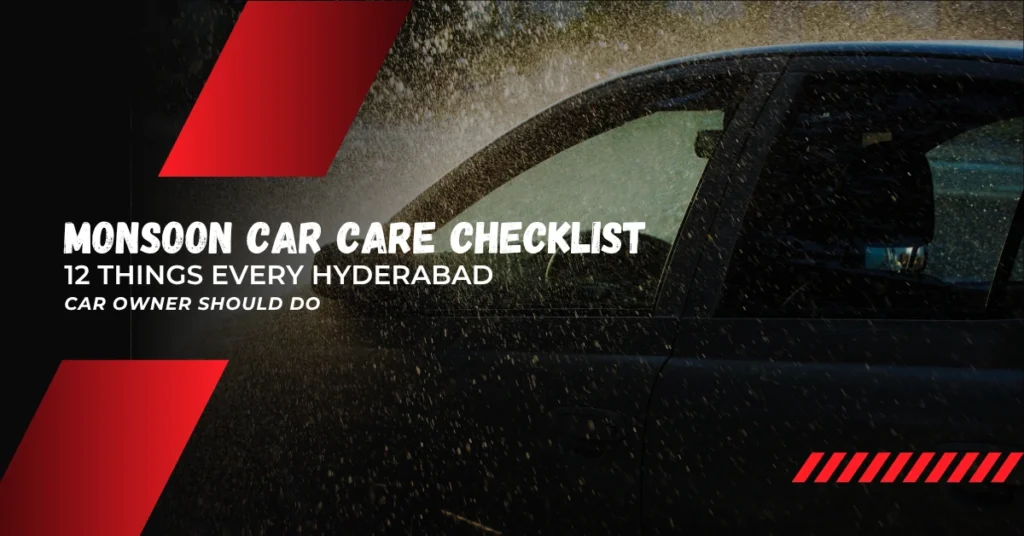
In this Monsoon Car Care Checklist, we’ll walk through 12 essential maintenance tips every Hyderabad car owner should have on their radar. Let’s start with the first six that need your attention right away.
1. Inspect Your Tyres — Your First Line of Defence
On wet roads, your tyres are doing a lot more than just keeping the car moving — they’re what’s keeping you gripped to the road, steering straight, and stopping in time.
As tread wears down, tyres get worse at pushing water out from under them. That’s when hydroplaning becomes a real risk — the tyres briefly lose contact with the road and glide over a thin film of water instead of gripping it.
Before driving this monsoon, inspect:
- Tyre tread depth
- Air pressure
- Sidewall cracks or bulges
- Uneven wear patterns
- Spare tyre condition
MotoMinds Tip: Tyre pressure shifts naturally with temperature. Check it every couple of weeks through the monsoon for better grip and fuel efficiency.
2. Don’t Wait for Your Wipers to Fail
Most people only start thinking about their wipers once heavy rain has already made it hard to see.
If yours are streaking, chattering across the glass, or skipping patches, they’re not doing their job anymore.
A fresh set of wiper blades makes a real difference during sudden downpours — especially at night or in heavy city traffic.
Signs it’s time to replace them:
- Streaking
- Squeaking
- Split rubber edges
- Uneven wiping
Wiper blades are cheap enough that replacing them before the season starts is one of the easiest safety upgrades you can make.
3. Your Brakes Work Harder in the Rain
Braking distances stretch out on wet roads, so your brakes need to work flawlessly every single time.
Noticed any strange noises, vibrations, or a delay before the car stops? Don’t put off getting it checked.
A proper brake check should cover:
- Brake pads
- Brake discs
- Brake fluid
- ABS functionality
- Overall brake response
Ignoring small brake issues now could compromise your safety the next time you need to stop in a hurry.
4. Rain Doesn’t Clean Your Car — It Damages It
A lot of car owners assume rainwater is basically clean. It isn’t.
Rain picks up airborne pollutants, industrial dust, road grime, and acidic residue on its way down, and all of that settles on your paint. Once the water evaporates, the contaminants stay behind — leaving water spots and slowly dulling the finish.
Add muddy roads into the mix, and you’ve got a real risk of fine scratches if the dirt isn’t cleaned off the right way.
To protect your paint:
- Wash the vehicle regularly during monsoon.
- Never let mud dry on the paint.
- Dry the car thoroughly after washing.
- Use automotive shampoo instead of household detergents.
If you want protection that lasts longer, Ceramic Coating and Paint Protection Film (PPF) add an extra barrier against rain, dirt, and everyday contaminants — and make routine cleaning a lot easier too.
5. A Clean Windshield Can Save Precious Seconds
Good visibility isn’t only about wipers that work.
A windshield covered in dust, oily film, or stubborn water spots throws off glare from streetlights and oncoming headlights, making it harder to judge distance in heavy rain.
A five-minute cleaning routine can make a noticeable difference:
- Clean both sides of the windshield.
- Refill washer fluid.
- Inspect washer nozzles.
- Remove hard water stains before the rainy season.
Even small improvements in visibility often mean faster reaction time when it counts.
6. Check Your Battery Before It Checks Out
Monsoon puts extra strain on your car’s electrical system.
Headlights stay on longer, wipers run non-stop, the AC works overtime, and humidity speeds up corrosion around the battery terminals.
If your battery’s already a few years old, this is usually when problems start showing up.
Warning signs to watch for:
- Slow engine cranking
- Dim headlights
- Battery warning light
- Corroded terminals
- Difficulty starting after rain
A quick battery health check takes just a few minutes but can save you from a breakdown on the side of the road.
The first six checks covered what you notice every time you drive — tyres, brakes, battery, visibility, paint. But there are a few equally important parts of your car that tend to go unnoticed.
These hidden areas might not show obvious signs of trouble, but months of rain, moisture, mud, and humidity can quietly turn into expensive repairs if you let them go unchecked.
Let’s get into the remaining six items on the checklist to keep your car safe and reliable through Hyderabad’s rainy season.
7. Inspect Rubber Beading & Door Seals
Your car is built to keep water out — but only if the rubber seals are doing their job.
The beading around your doors, windows, and boot is what keeps rain from getting into the cabin. Over time, though, sun and shifting weather can make these seals go hard, crack, or lose their flexibility.
Damaged seals can lead to:
- Water leaking into the cabin
- Damp carpets and upholstery
- Fogged-up windows
- Mold and mildew growth
- Damage to electrical components
What You Should Do
- Inspect the rubber seals around all doors and windows.
- Clean accumulated dirt from the beading.
- Look for cracks, gaps, or loose sections.
- Replace worn-out seals before the monsoon peaks.
MotoMinds Tip: Applying a rubber conditioner every so often keeps door seals soft and helps them last longer.
8. Clean or Replace Your Cabin Air Filter
If your car smells musty every time the AC kicks on during monsoon, the cabin air filter is usually to blame.
It’s the filter’s job to trap dust, pollen, pollution, and moisture before they reach the cabin. During the rainy season, it’s working harder than usual and can clog up faster than you’d expect.
A dirty cabin filter can cause:
- Reduced AC cooling
- Weak airflow
- Fogging inside the cabin
- Unpleasant odours
- Increased dust circulation
Replacing it at regular intervals doesn’t just improve air quality — it also helps your AC work more efficiently.
Signs It Needs Attention
- Weak airflow
- Bad smell from AC vents
- Excessive windshield fogging
- Increased cabin dust
9. Wash the Undercarriage Regularly
A car can look spotless on the outside and still be hiding serious grime underneath.
Every drive through muddy roads or waterlogged streets leaves dirt, slush, road salt, and moisture stuck to your underbody. Over time, that buildup speeds up rust and wears down suspension and chassis parts.
The trouble is, most people only ever wash the exterior and never think about what’s underneath.
Make Undercarriage Cleaning a Habit — especially after driving through:
- Flooded roads
- Construction zones
- Muddy streets
- Long highway journeys during rain
Regular underbody cleaning helps prevent corrosion and keeps the mechanical bits underneath in better shape for years to come.
10. Keep the Interior Dry
It’s not just the outside of your car that takes a hit from the rain — your cabin can suffer too.
Wet shoes, umbrellas, raincoats, and damp floor mats bring moisture inside every single day. Left alone, that trapped moisture can cause bad smells, encourage mould, and even mess with interior electronics over time.
Simple Ways to Keep Your Cabin Fresh
- Remove wet floor mats and dry them completely.
- Wipe moisture off door sills and interiors.
- Avoid leaving damp clothes inside the car.
- Keep a microfiber towel handy during rainy days.
A dry cabin isn’t just more comfortable — it also helps protect your upholstery and interior finishes.
11. Check All Exterior Lights
Visibility isn’t only about what you can see — it’s also about whether other drivers can see you.
Heavy rain, dark skies, and poor visibility on the road make your car’s lights more important than ever.
Before driving during the monsoon, check:
- Headlights
- Tail lamps
- Brake lights
- Turn indicators
- Fog lamps (if equipped)
Clean the lenses too — dirt and water stains can cut down brightness a lot, even when the bulbs themselves are working fine.
Good lighting keeps everyone on the road safer, not just you.
12. Schedule a Professional Monsoon Inspection
Even if you’ve ticked off every item on this list, some problems are hard to catch without a proper inspection.
Minor suspension wear, early brake issues, hidden leaks, or weakening electrical connections often go unnoticed until they turn into expensive repairs.
A professional monsoon inspection gives you peace of mind by catching potential issues before they affect your everyday drives.
A Comprehensive Inspection Typically Includes
- Tyre health and pressure
- Brake inspection
- Suspension check
- Battery testing
- Fluid level inspection
- Electrical system check
- Wiper and washer inspection
- Underbody evaluation
Preventive maintenance always costs less than an emergency repair.
Monsoon Emergency Kit Every Car Should Carry
Unexpected situations come with the territory during monsoon. Keeping a small emergency kit in your car can make a real difference if you’re stuck in traffic, caught in heavy rain, or dealing with a roadside issue.
Your monsoon car kit should include:
- Microfiber cloth
- Portable tyre inflator
- Flashlight or torch
- Power bank or phone charger
- Basic first-aid kit
- Jumper cables
- Reflective warning triangle
- Foldable umbrella or raincoat
It’s a small addition that makes rainy-day driving a lot safer and more convenient.
Conclusion
Monsoon season doesn’t have to be stressful for your car. A bit of preparation before the rains, plus consistent care throughout the season, goes a long way in protecting your vehicle from damage you could have avoided.
Follow this 12-point Monsoon Car Care Checklist, and you’re not just improving safety on wet roads — you’re also extending your car’s life, keeping it looking good, and cutting down the odds of a costly repair.
Whether it’s checking your tyres, protecting your paint, cleaning the underbody, or keeping the cabin dry, every small step adds up to a smoother, more reliable drive.
Why MotoMinds?
At MotoMinds, we believe your car deserves care all year round — not just when something’s already gone wrong.
Our team specialises in premium automotive care and customization, helping Hyderabad car owners keep both the performance and appearance of their vehicles in shape through every season.
From professional detailing and ceramic coating to Paint Protection Film (PPF), interior deep cleaning, paint correction, and preventive maintenance inspections, we offer solutions built to protect your investment and improve your driving experience.
Whether you drive a daily commuter, an SUV, or a luxury vehicle, our technicians bring quality products and genuine attention to detail, so your car leaves our workshop looking and performing its best.
Book Your Monsoon Car Check Today
Don’t wait for a minor issue to turn into an expensive repair.
Visit MotoMinds for a comprehensive monsoon inspection, and let our experts help get your vehicle ready for Hyderabad’s rainy roads.
Drive safer. Protect your investment. Enjoy every journey — rain or shine.
Frequently Asked Questions (FAQs)
1. How often should I wash my car during the monsoon?
Ideally every one to two weeks, or sooner if you’ve driven through muddy roads. Regular washing keeps dirt, contaminants, and moisture from damaging your paint.
2. Can rainwater damage my car’s paint?
Yes. Rainwater often carries pollutants and acidic particles that can leave water spots and dull your car’s finish over time if it isn’t cleaned off properly.
3. Is Ceramic Coating enough to protect my car during monsoon?
Ceramic coating gives you great protection against water, dirt, and contaminants, and it makes cleaning easier. That said, you’ll still want to keep up with regular washing and maintenance.
4. Does Paint Protection Film (PPF) help during the rainy season?
Definitely. PPF adds an extra layer of protection against mud, stone chips, road debris, and minor scratches, which makes it especially useful during monsoon.
5. Why does my car smell damp during the rainy season?
Usually it’s moisture trapped in the cabin, wet floor mats, or a dirty cabin air filter. Keeping the interior dry and replacing the cabin filter when needed helps get rid of the smell.
6. Is underbody cleaning really necessary?
Yes. Mud and moisture build up underneath your car and can eventually cause rust and corrosion. Regular underbody cleaning protects your suspension and chassis components.
7. How often should I replace my windshield wiper blades?
Most wiper blades should be replaced every 6 to 12 months, depending on how much you drive and the weather. If they’re streaking or chattering, replace them right away.